

Imagine stepping into a world where your favorite movie characters pop up in your living room, or your gaming adventures spill into the real world. That’s the magic of augmented reality (AR) entertainment. It’s like having a backstage pass to a show where the boundaries between the screen and reality blur, creating experiences that are as immersive as they are unforgettable.
In a time when binge-watching is practically an Olympic sport, AR offers a fresh twist that keeps audiences on their toes. From interactive games to mind-bending experiences, AR is revolutionizing how we consume entertainment. So grab your headset and get ready to dive into a realm where the only limit is your imagination. Who needs a couch when you can have a virtual roller coaster in your backyard?
Overview of Augmented Reality Entertainment
Augmented reality (AR) entertainment revolutionizes how audiences engage with content. By merging digital elements with the real world, it creates interactive environments. Users interact with virtual characters and elements through their devices, which enhances immersion.
Various applications exist within AR entertainment, including gaming, concerts, and theme park attractions. Popular games like Pokémon GO showcase AR’s ability to encourage exploration in familiar settings. Concerts utilize AR to provide stunning visuals that transform live performances, creating unforgettable experiences.
Technology plays a critical role in delivering these experiences. Mobile devices equipped with AR capabilities allow users to access engaging content anytime, anywhere. Headsets and smart glasses further amplify this experience by seamlessly integrating digital overlays.
Statistics highlight AR’s growing popularity. Reports indicate that the global AR market size in entertainment reached approximately $2.5 billion in 2023, with projections suggesting continued growth. Audiences increasingly prefer AR experiences that promote interaction over passive viewing.
Creativity soars when AR blends storytelling with user involvement. Content creators explore innovative narratives, where audience choices shape outcomes. This shift in storytelling empowers fans to become active participants rather than passive observers.
Industry leaders invest significantly in developing AR content. Companies prioritize enhancing user engagement through immersive experiences. They recognize AR’s potential to reach broader demographics, ensuring diverse audience participation.
As augmented reality entertainment evolves, it continues to reshape how audiences connect with their favorite stories and characters. Enthusiasts can look forward to a future where entertainment transcends traditional boundaries, fostering limitless opportunities for exploration and enjoyment.
Key Technologies Behind Augmented Reality
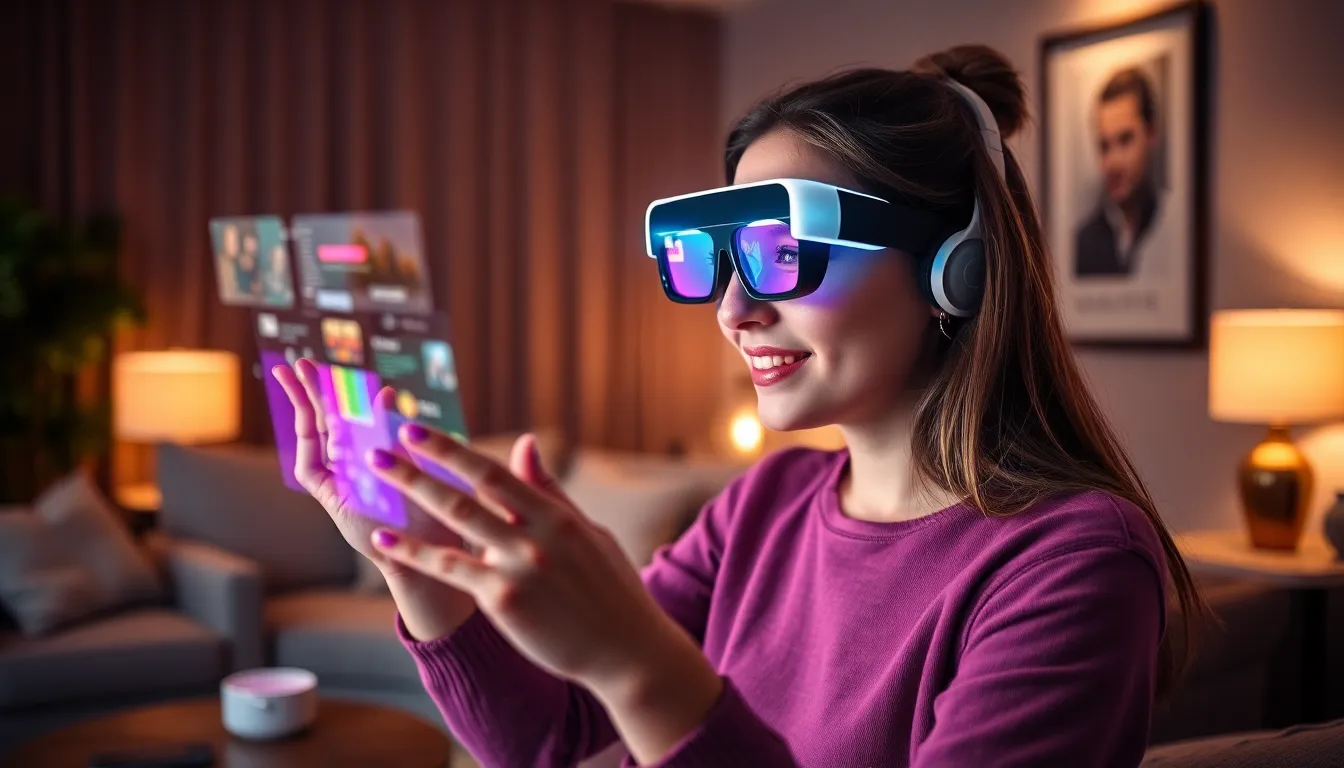
Augmented reality entertainment relies on advancements in both hardware and software technologies. These innovations drive the immersive experiences that engage audiences.
Hardware Innovations
Innovative hardware is crucial for delivering augmented reality experiences. Mobile devices equipped with powerful processors support complex graphics and real-time rendering. Smart glasses and AR headsets enhance interaction by providing a hands-free environment where users engage with digital elements directly. Sensors such as cameras and GPS facilitate location tracking, allowing digital content to seamlessly integrate with real-world surroundings. AR-capable devices also often feature advanced displays that provide vibrant visuals, fostering a captivating viewing experience. The variety of available hardware options caters to a broad audience, ensuring accessibility and encouraging the rapid growth of AR entertainment.
Software Developments
Robust software frameworks underpin the effectiveness of augmented reality. Development platforms like ARKit and ARCore enable creators to design AR applications easily, optimizing performance for different devices. These platforms offer tools for object recognition and spatial mapping, enhancing user interaction. additionally, cloud computing supports AR apps by facilitating storage and processing of complex data. Machine learning algorithms enhance the realism of virtual objects, allowing them to interact more naturally with real-world elements. Continuous software updates and enhancements ensure that users experience evolving and engaging content, paving the way for innovative storytelling methods in AR entertainment.
Popular Augmented Reality Entertainment Applications
Augmented reality entertainment applications offer unique ways to engage users. These applications span mobile games and interactive experiences, transforming how individuals interact with their environments.
Mobile Games
Mobile games dominate the augmented reality landscape, blending real-world exploration with gaming. Pokémon GO serves as a prime example, encouraging users to venture outdoors while capturing virtual Pokémon. Other titles, such as Harry Potter: Wizards Unite, tap into established franchises, fostering community interaction through collaborative gameplay. These games leverage GPS technology to create location-based experiences, allowing players to discover hidden treasures in their everyday surroundings. With over 300 million downloads, mobile AR games illustrate significant user interest and participation in augmented reality.
Interactive Experiences
Interactive experiences redefine storytelling and engagement for audiences. AR applications like IKEA Place enable users to visualize furniture in their spaces before making a purchase. Concerts also benefit from AR innovations, enhancing performances with dynamic visual displays and real-time interactions. These experiences blur the lines between digital and physical realms, creating immersive events where users actively participate. An interactive museum exhibit showcasing historical artifacts allows visitors to engage with holographic representations, transforming passive viewing into an engaging activity. AR enables limitless creativity, captivating audiences and enhancing entertainment value in diverse environments.
The Impact of Augmented Reality on User Engagement
Augmented reality (AR) significantly enhances user engagement by merging the digital and real worlds. AR allows users to interact with virtual elements in their environment, transforming passive consumption into active participation. Experiences become immersive, captivating audiences in ways traditional entertainment cannot achieve.
Engagement metrics show that AR applications boost user attention. For instance, gamers interacting with titles like Pokémon GO typically spend over 30 minutes per session. This level of involvement is a strong indicator of how AR captivates users with unique experiences.
Users benefit from enhanced storytelling. With AR, their decisions can shape narratives. This shift empowers audiences to take control over their entertainment, leading to deeper connections with content and characters.
AR technology bridges gaps between various demographics. It encourages exploration, drawing users outdoors and fostering community interaction. Data indicates that AR entertainment generates meaningful social experiences, with over 60% of players enjoying group play.
Applications like IKEA Place further illustrate AR’s impact. Users visualize furniture in their homes, enhancing shopping experiences and reducing uncertainty. Instant gratification accompanies this practical application, facilitating informed decisions.
AR’s influence on concerts also warrants mention. Interactive elements create a unique ambiance, allowing attendees to engage with performances more than ever. Performers leverage AR to craft memorable experiences that resonate with audiences long after the event concludes.
These factors collectively demonstrate AR’s growing prominence in entertainment. According to recent reports, the global AR market in entertainment is projected to reach $2.5 billion in 2023. Investments in AR content are climbing as industry leaders recognize the unique opportunities for audience engagement and storytelling innovations.
Future Trends in Augmented Reality Entertainment
Augmented reality entertainment continues to evolve rapidly, driving innovative experiences. Advances in technology suggest that AR will increasingly integrate with artificial intelligence. This integration enables personalized narratives that adapt based on user interactions, enhancing storytelling depth.
User-generated content becomes a key trend as platforms allow audience participation in the creation of unique AR experiences. Content creators will shape immersive environments that reflect popular themes, potentially increasing community engagement. Observing this trend, developers prioritize inclusivity, striving for AR experiences that cater to diverse audiences.
Future innovations in hardware promise greater accessibility, with affordable AR devices set to enter the market. Enhanced features in mobile devices, such as improved graphics and processing power, will facilitate seamless interactions, attracting larger user bases. Predictions indicate that the global AR entertainment market could reach around $6 billion by 2028.
Interactivity will redefine entertainment formats, with live events becoming increasingly immersive through AR. Concerts and theater performances might adopt AR elements that engage audiences in real time. Users will interact with virtual characters and scenarios, transforming how they experience events.
Education and training applications are expected to expand, utilizing AR to create realistic simulations. Industries may adopt AR for training purposes, providing professionals with hands-on experiences in safe environments. The blend of fun and functionality ensures that AR remains relevant across sectors.
Social media platforms are likely to play a pivotal role in spreading AR experiences, promoting sharing and engagement. Users can capture and share immersive moments in real-time, creating viral content that boosts AR’s visibility. Insights reveal that content sharing increases user retention, paving the way for sustained audience growth.
The future of augmented reality entertainment promises continual transformation, driven by technology, creativity, and audience engagement.
Augmented reality entertainment is reshaping how audiences interact with their favorite stories and experiences. By merging the digital and physical worlds, it offers a captivating platform for creativity and engagement. As technology evolves AR’s potential continues to expand, enabling deeper connections between users and content.
The rise of user-generated experiences and personalized narratives signals a shift towards more inclusive and dynamic entertainment. With industry leaders investing heavily in AR innovations, the future looks bright for this immersive medium. As AR becomes more accessible, it’s set to revolutionize not just entertainment but also education and social interactions, paving the way for a more engaging and interactive future.

