

In a world where technology seems to be evolving faster than a cat meme goes viral, it’s crucial to differentiate between mixed reality and augmented reality. Imagine if you could overlay digital information onto your physical surroundings, but with a twist – what if that information could interact with the real world in real time? Sounds like something out of a sci-fi movie, right? Well, welcome to the realms of mixed reality (MR) and augmented reality (AR). Let’s jump into the nuances of these captivating technologies, all while keeping a sense of humor intact. After all, who said tech discussions can’t be fun?
Understanding the Concepts
What Is Augmented Reality?
Augmented reality refers to the technology that superimposes digital information – like images, sounds, and other sensory stimuli – onto the real world. This tech is often experienced through smartphones, tablets, or AR glasses, enriching the user’s perception of reality. Think Pokémon GO, where players chase digital creatures in a physical environment.
Features and Applications of Augmented Reality
Augmented reality isn’t just for gaming: it finds applications across various fields. Retail is one area where AR shines. Ever tried on a pair of virtual glasses through an app before making a purchase? That’s AR in action, helping consumers visualize products in their lives before the buying decision. In education, AR can turn mundane subjects into interactive experiences, allowing students to engage with content in innovative ways. Imagine a student learning anatomy by ‘dissecting’ a virtual body. The potential is boundless.
What Is Mixed Reality?
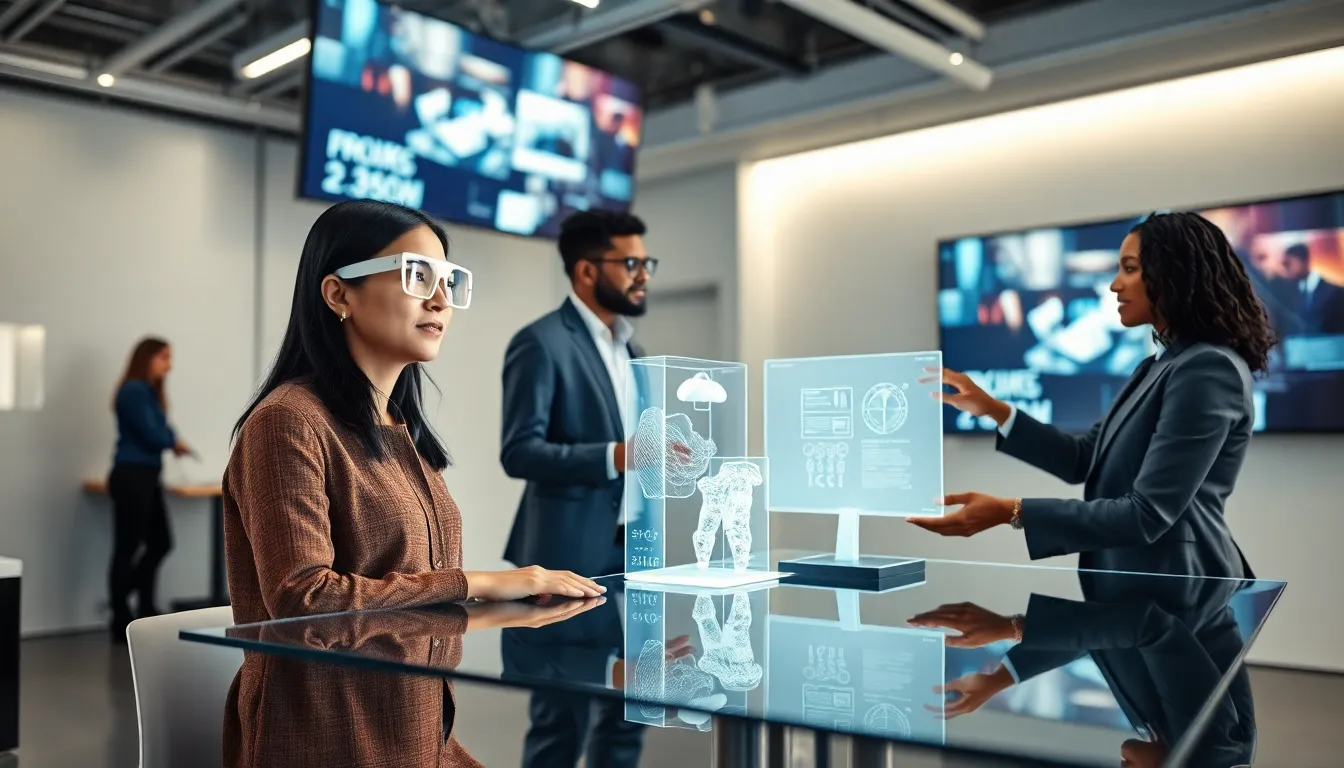
On the other hand, mixed reality takes things a step further. MR combines real and virtual worlds, allowing users to interact with digital objects as if they exist in the real world. This means users can manipulate virtual elements directly within their physical environment. For instance, with a mixed reality headset, a user might reach out to grab a virtual object and witness it behave as if it were real.
Features and Applications of Mixed Reality
Mixed reality has profound implications, particularly in industries like healthcare and engineering. Surgeons are using MR to visualize patient data during operations, significantly enhancing precision. In architecture, designers can overlay building plans onto real construction sites, offering a clearer perspective of how projects will fit into existing spaces. When MR meets real-world applications, the possibilities seem almost limitless.
Key Differences Between Mixed Reality and Augmented Reality
While both augmented reality and mixed reality enhance user experiences, they do so in fundamentally different ways. With AR, the digital elements are overlaid onto the physical world but remain independent of it. Think of it as a sticker on a wall – a fun addition, yet it doesn’t interact with the wall itself.
In contrast, mixed reality allows for interaction between the real and virtual elements. It’s like having a ghost in your house that not only floats around but can also pick up your coffee mug and spill it all over your keyboard. In short, AR is about addition, while MR is about interaction.
In terms of technology, AR generally requires less sophisticated hardware than MR, making it more accessible. Most smartphones can run AR applications, whereas MR often involves specialized headsets, such as Microsoft HoloLens or Magic Leap.
Use Cases and Real-World Applications
The landscape for both AR and MR is vast, spanning numerous industries.
In retail, AR apps can help customers visualize furniture in their homes before purchasing. IKEA’s app allows users to place virtual chairs or tables in their living rooms, letting them see how the items look without the hassle of lugging them home.
In the realm of education, AR apps can bring history to life. Imagine students walking around a museum and pointing their devices at exhibits, revealing immersive multimedia content. MR goes even further – think of architecture and engineering firms using MR for realistic project visualizations. Design teams can collaborate remotely, interacting with 3D models in the same physical space.
Healthcare also benefits immensely. AR can help aspire surgeons visualize arteries and organs, while MR has been used for training medical students by allowing them to engage with holographic patients. Such practical applications are setting the stage for a future where immersive technology becomes routine in day-to-day tasks.
The Future of Mixed Reality and Augmented Reality
As we look ahead, both mixed reality and augmented reality are poised for exponential growth. With advances in hardware and software, the immersive experience will become increasingly seamless. Tech giants are investing heavily in MR and AR, which hints at bright prospects.
For MR, expect the technology to meld with artificial intelligence, enabling not just real-time interaction but smart predictions based on user behavior. Picture machines that can anticipate your moves. The integration of real-world data will enhance personalized experiences, making application possibilities even more fascinating.
About AR, we’ll likely see widespread adoption across education, healthcare, and entertainment. Imagine attending a concert and having a portable, AR-enabled screen that enhances the experience with live visuals and information about the performers. The horizon holds many possibilities, transforming both personal and societal interactions.

