

In a world where shopping can feel as mundane as watching paint dry, augmented reality (AR) retail solutions are shaking things up. Imagine trying on that snazzy jacket without ever stepping foot in the store or visualizing how that couch fits in your living room with just a swipe of your phone. AR isn’t just a gimmick; it’s the shopping revolution that’s here to make retail as exciting as a surprise party.
Retailers are jumping on the AR bandwagon, turning the shopping experience into an interactive adventure. With AR, customers can engage with products like never before, making decisions that are not only informed but also fun. It’s time to embrace the future of shopping where the only thing missing is the popcorn! Buckle up as we explore how augmented reality is transforming retail into a dynamic playground for consumers and businesses alike.
Overview of Augmented Reality Retail Solutions
Augmented reality retail solutions enhance the shopping experience through interactive technology. Retailers implement AR to allow customers to visualize products in real time. Shoppers can try on apparel virtually or see how furniture fits into their spaces. This technology bridges the gap between online and in-store experiences. Features such as 3D product models and virtual test drives create immersive environments.
The immersive nature of AR stimulates customer engagement. It provides immediate feedback, allowing shoppers to make informed purchasing decisions. Retail data shows that AR can reduce return rates, as customers experience a more accurate representation of products. Consumers are likely to spend 20% to 30% more time shopping when AR is involved.
Popularity continues to grow with brands adopting AR in marketing campaigns. Examples include IKEA’s Place app, which demonstrates how furniture looks in homes, and Sephora’s Virtual Artist tool that allows customers to try on makeup virtually. Companies report increases in customer satisfaction through these AR applications.
Integration of AR with mobile devices expands accessibility. Customers can use their smartphones to interact with products anytime and anywhere. As technology advances, AR’s potential to influence retail continues to evolve. Businesses benefit from enhanced visibility and differentiation in a competitive market.
Understanding these solutions paves the way for future developments in retail innovation. Retailers embracing AR set themselves apart by offering engaging experiences that resonate with tech-savvy consumers. As AR solutions become more accessible, their impact on retail refreshes the consumer landscape.
Benefits of Augmented Reality in Retail
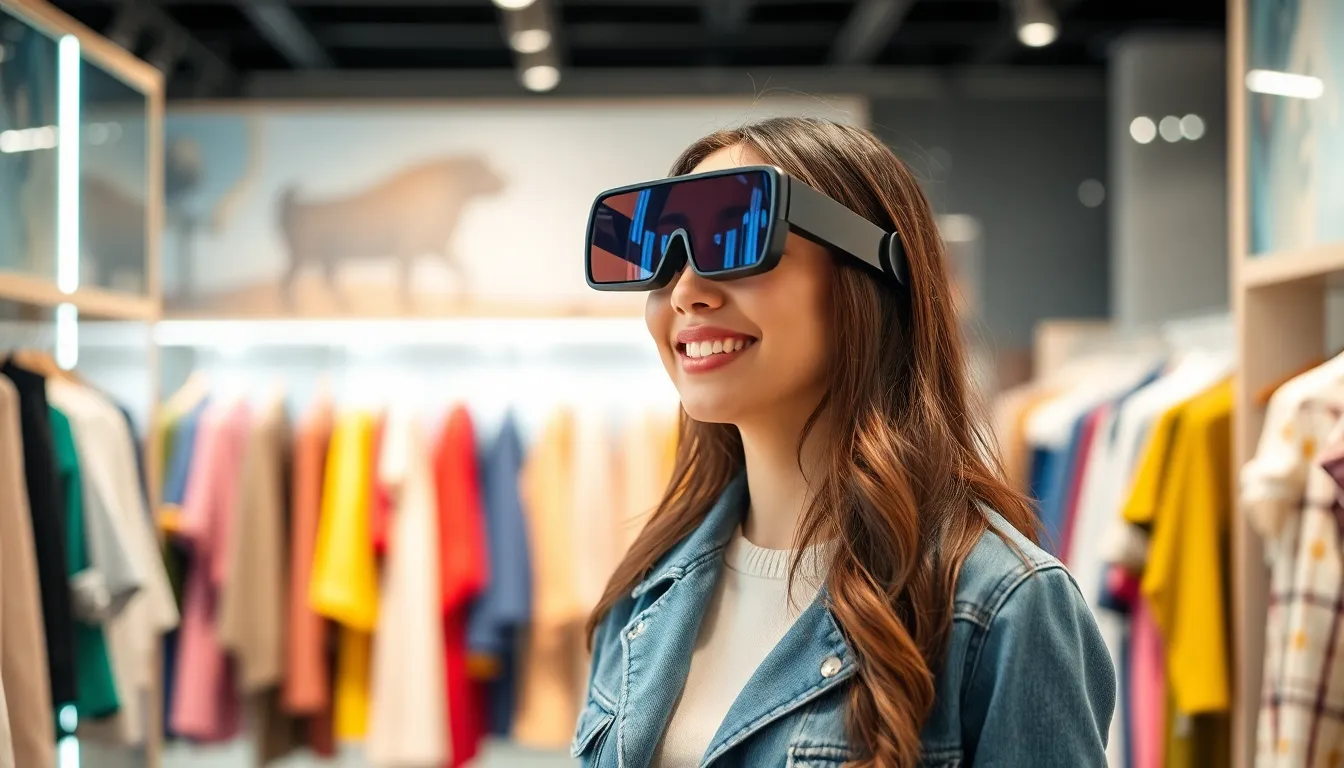
Augmented reality brings substantial advantages to retail, enhancing the overall shopping experience.
Enhanced Customer Experience
Augmented reality offers customers the ability to virtually try on clothing, providing a clearer picture of how items fit. This technology simplifies decision-making by allowing instant visualization of products in personal environments. Customers feel more confident in their purchases, which promotes satisfaction. Research shows a significant reduction in return rates, with AR retail solutions demonstrating up to a 30% decrease. Shoppers enjoy a more personalized experience that builds loyalty, making it more enjoyable and efficient.
Increased Engagement
Engaging customers through immersive experiences becomes seamless with augmented reality. Realistic 3D product models capture attention and stimulate interest, prompting exploration. Interactive elements encourage deeper interactions with products, resulting in increased time spent in stores and on websites. According to retail data, AR solutions can boost customer engagement by enhancing brand storytelling. Shoppers develop a stronger emotional connection to products, fostering brand loyalty that translates to ongoing patronage. As a result, retailers benefit from a heightened competitive edge in the marketplace.
Implementing Augmented Reality Retail Solutions
Implementing augmented reality in retail offers a path to a more immersive shopping experience. Successful integration relies on key technologies and a structured approach.
Key Technologies Involved
Various technologies underpin augmented reality solutions in retail. AR software enables interactive overlays on products. Computer vision technology tracks and recognizes items in real time, allowing customers to visualize them in unique settings. Mobile devices play a crucial role, making AR accessible through smartphones and tablets. Cloud computing supports data storage and processing, ensuring smooth operation of AR applications. Sensors enhance interactivity by capturing customer movements and interactions. Retailers that utilize these technologies create engaging environments for shoppers.
Steps for Successful Implementation
Implementing AR requires a clear strategy. First, identify specific goals such as increasing customer engagement or reducing product return rates. Next, assess the target audience and understand their preferences for AR experiences. After this, select the right technologies that align with business objectives and customer needs. Develop a prototype to gather feedback and refine the approach. Train staff on AR tools to enhance customer interaction. Finally, launch the solution and monitor its performance through analytics, enabling ongoing improvements and adjustments based on customer behavior.
Case Studies of Augmented Reality in Retail
Numerous retailers leverage augmented reality to enhance the customer experience and drive business growth. These case studies illustrate the profound impact AR has on the retail landscape.
Successful Brands Utilizing AR
Brands like IKEA and Sephora serve as prime examples of AR implementation in retail. IKEA’s app allows users to visualize furniture in their homes using 3D models before making purchases. Sephora’s AR feature enables customers to try on makeup virtually, enhancing customer engagement. Other companies, such as Nike and Adidas, have also embraced AR for virtual product trials, fostering interaction with consumers. These early adopters showcase the potential AR holds in enriching shopping experiences and encouraging brand loyalty. Their successful strategies highlight how integrating AR creates a more interactive environment, appealing to today’s tech-savvy consumers.
Measurable Impacts on Sales
The measurable impacts of AR on sales are significant. Research indicates AR can increase shopping time by 20% to 30%. Brands that employ AR solutions see decreased return rates, often achieving reductions up to 30%. AR enhances product visualization, which contributes to informed purchasing decisions and customer satisfaction. Companies implementing AR often report higher conversion rates, as customers feel more confident in their choices. Data suggests that retailers who adopt AR not only experience growth in sales but also build stronger relationships with their clientele, leading to repeat business. This measurable success illustrates the effectiveness of augmented reality in transforming the retail experience.
Challenges and Considerations
While augmented reality retail solutions offer numerous advantages, they also come with challenges that need attention.
Technical Limitations
Technical limitations can hinder the effectiveness of AR solutions in retail. Hardware requirements often demand high-quality mobile devices, which some consumers may not possess. Compatibility issues between AR applications and various operating systems can further complicate implementation. Network connectivity plays a crucial role, as slow connections can lead to laggy experiences. Additionally, development costs for creating high-quality AR content can be a barrier, particularly for smaller retailers. Addressing these challenges requires careful planning and resources to ensure a seamless shopping experience.
Consumer Acceptance
Consumer acceptance remains a significant hurdle for retailers implementing AR. While many customers appreciate the interactive experience, some remain skeptical about its value. A lack of familiarity with AR technology can limit its adoption among certain demographics. Trust is another factor; consumers may be hesitant to engage with virtual try-ons or presentations. Retailers must focus on educating shoppers about the benefits and practical applications of AR to improve acceptance. Creating intuitive and user-friendly experiences can also help encourage broader consumer engagement and satisfaction.
Augmented reality is reshaping the retail landscape by enhancing customer experiences and driving engagement. As retailers embrace this technology they create interactive environments that not only captivate shoppers but also foster brand loyalty. The benefits of AR go beyond mere entertainment; they lead to informed purchasing decisions and lower return rates.
With successful implementations from brands like IKEA and Sephora the potential for AR in retail is undeniable. Retailers must continue to innovate and educate consumers about the advantages of AR to overcome challenges and maximize its impact. As this technology evolves it promises to make shopping more immersive and enjoyable for everyone.

