
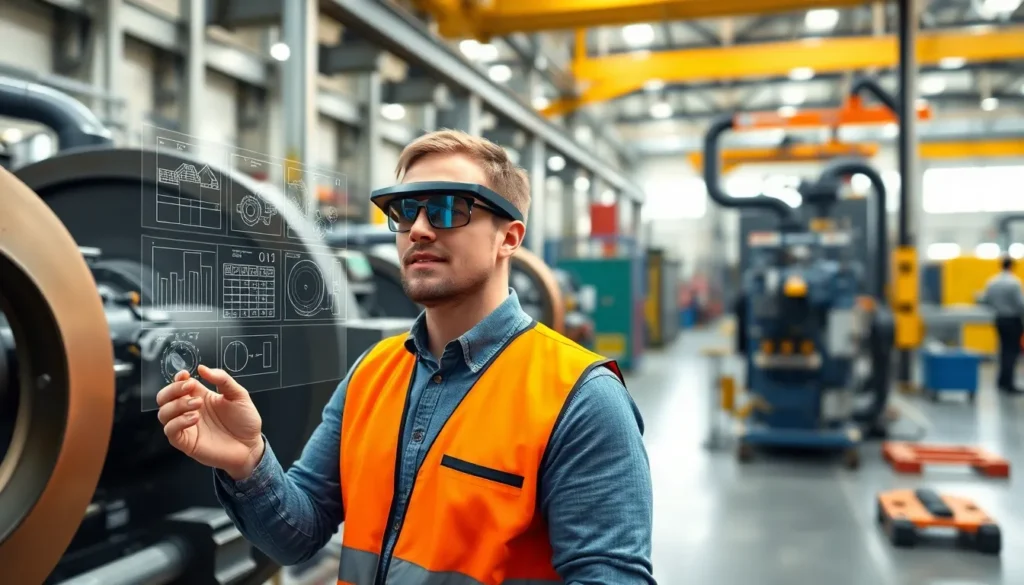
Imagine walking into a factory and instantly seeing crucial machine data overlaying the equipment right before your eyes. No, this isn’t a scene from a sci-fi movie: it’s the reality of industrial augmented reality (AR). It’s like your favorite video game just decided to invade the workplace, but instead of slaying dragons, workers are slaying inefficiencies. In a world that constantly seeks improvement and innovation, AR is taking the lead, creating new horizons in industrial operations. Let’s investigate into this fascinating technology, explore its possibilities, and maybe even imagine future scenarios that could make Steve Jobs jealous.
Understanding Augmented Reality in Industry
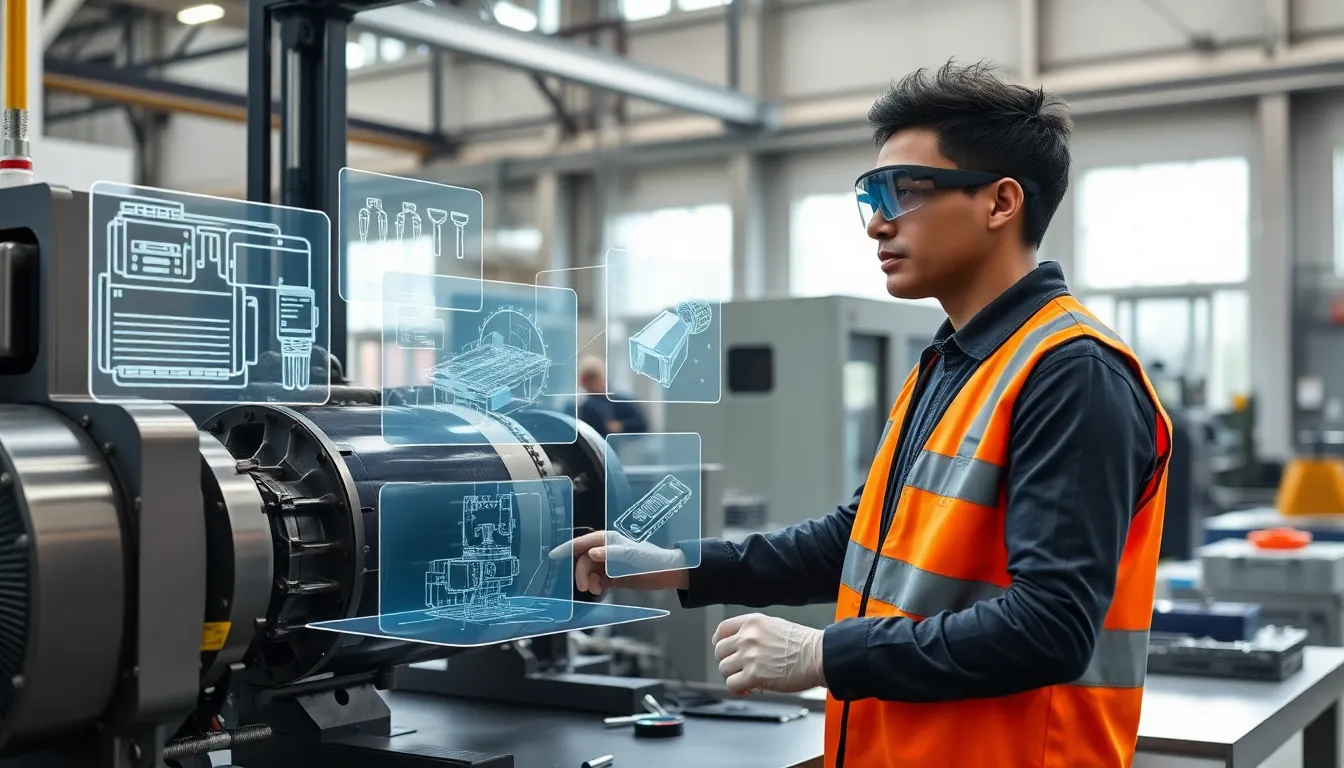
At its core, augmented reality is the integration of digital information with the physical environment. Unlike virtual reality, which takes players into a completely simulated world, AR enhances the real world with overlays of sound, video, graphics, and GPS data. In industrial settings, this means workers can receive instructions, visualizations, and critical information right when they need it. For instance, a technician repairing a complex piece of machinery can see real-time diagrams or overlays showing where to focus their efforts. This alignment of digital and physical realms allows for unprecedented clarity and efficiency.
Key Technologies Behind Industrial Augmented Reality
Several technologies drive the incredible advancements in industrial augmented reality. First, mobile devices like smartphones and tablets have made AR accessible. These devices can effectively process complex AR applications and display detailed graphics. Next, wearable technology, including smart glasses, offers hands-free, immersive experiences. Imagine wearing glasses that guide you through tasks seamlessly: that’s where we’re headed. Also, cloud computing facilitates the storage and sharing of vast amounts of data while ensuring that the hardware does not overburden local devices. Finally, computer vision plays a crucial role, enabling systems to interpret and interact with the user’s environment.
Applications of Augmented Reality in Various Industries
The applications of augmented reality in industry are vast and growing. In manufacturing, AR can provide real-time data analytics, helping teams to optimize and streamline operations during the production process. Maintenance is another area significantly impacted by AR. Technicians can display maintenance manuals directly over the machinery, drastically reducing error risk and time spent searching for information. In the logistics sector, AR can assist with warehouse navigation, improving the speed and efficiency of package handling. Health care also benefits from AR, as surgeons can visualize anatomical structures during procedures, which enhances both safety and effectiveness.
Benefits of Implementing Augmented Reality Solutions
Implementing industrial augmented reality solutions brings multiple benefits. First and foremost, the increase in productivity stands out. By providing instant access to information and guidance, workers perform tasks more quickly and accurately. Training time is shortened, too. New employees can learn on the job with AR assistance rather than relying solely on lengthy manuals or supervision. Cost savings materialize when errors decrease, production times shorten, and efficiency rises. Besides, employee satisfaction can improve as AR tools often make work more engaging and less daunting. When employees feel competent and well-supported, they’re more likely to stay onboard.
Challenges and Limitations of Industrial Augmented Reality
Even though its many advantages, augmented reality in industry is not without challenges. One significant hurdle is the integration of AR with existing infrastructure and systems. Organizations often face difficulties aligning new technologies with legacy systems, leading to a steep learning curve. Also, there is the issue of data security. In an increasingly digital world, protecting sensitive information becomes paramount. Also, the cost of implementing AR solutions can be high, particularly for small to mid-sized enterprises. Finally, as with any technology, there’s the risk of user resistance, individuals may hesitate to adapt to changes in their workflows.
Future Trends and Innovations in Industrial Augmented Reality
Looking forward, the future of industrial augmented reality appears bright. Emerging technologies like 5G will significantly enhance AR capabilities by providing faster and more reliable data transmission. This will allow more complex applications in real-time settings. Besides, advancements in artificial intelligence are expected to improve AR applications, making them more intuitive and responsive. Imagine an AR system that learns from previous interactions to better assist users. Collaborations between industry leaders and AR developers will likely lead to customized solutions tailored to specific sectors, which means that the next few years could bring innovations we can barely imagine today.

