
Table of Contents
ToggleImagine diving into a world where your living room transforms into a bustling alien marketplace or a serene underwater paradise. The internet has evolved beyond simple text and images, embracing the captivating realms of virtual reality, augmented reality, and immersive 3D environments. With just a headset or a smartphone, the possibilities are endless.
Overview of Virtual Reality, Augmented Reality, and 3D Environments
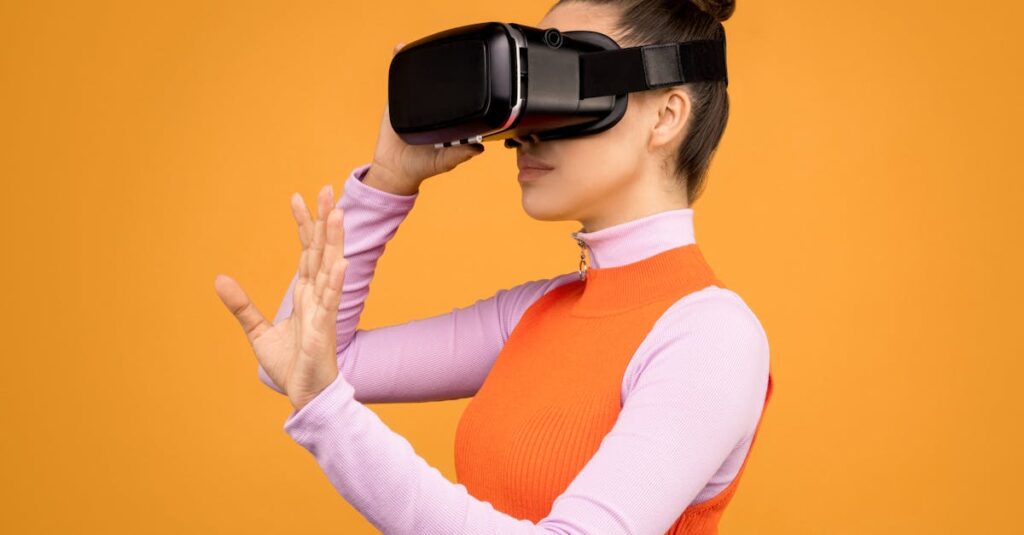
Virtual reality (VR) immerses users in fully interactive digital environments. Users experience a computer-generated world through headsets that track movement, creating a sense of presence. Gaming and simulations showcase VR’s potential in diverse applications.
Augmented reality (AR) overlays digital elements onto the real world. This technology enhances experiences by integrating digital information with physical surroundings. Applications include mobile games, educational tools, and retail experiences, allowing interaction with both real and virtual content.
3D environments refer to computer-generated spaces that provide depth and perspective. These settings facilitate interactive experiences across various platforms. Users explore complex structures and navigate virtual landscapes, from architectural models to gaming terrains.
Each technology serves distinct purposes, yet they interconnect. VR focuses on complete immersion, AR emphasizes real-world enhancement, and 3D environments serve as the backbone of both. Such innovations reshape how individuals engage with content, whether for entertainment, education, or training.
Significantly, industries leverage these technologies for practical benefits. Healthcare professionals utilize VR for surgical training, while retailers implement AR to visualize products in real time. Furthermore, 3D environments contribute to architectural visualization, advancing design processes.
VR, AR, and 3D environments represent the evolution of engagement methods in the digital landscape. They redefine user experiences, offering diverse applications that enhance interaction and creativity.
The Role of the Internet in Virtual Reality
The internet plays a crucial role in delivering immersive virtual reality experiences. It enhances user engagement and interactivity through cloud computing and high-speed connectivity.
Connectivity and Access
Connectivity provides users with seamless access to virtual environments. High-speed internet allows for real-time interactions within shared spaces. Users can participate in multiplayer games or collaborative meetings regardless of their physical location. Access to VR content often relies on online platforms for downloading or streaming experiences. Internet-enabled VR applications allow for instant updates and community sharing, maintaining user interest and engagement. Such connectivity transforms solitary experiences into shared adventures, bringing together individuals from around the world.
Popular VR Platforms
Several platforms dominate the VR landscape. Oculus Rift offers diverse experiences tailored for gaming and social interactions. HTC Vive provides room-scale tracking, ensuring an immersive experience. PlayStation VR caters to console users, combining gaming with VR. SteamVR serves as a hub for numerous VR titles, facilitating access to a broad range of content. Additionally, Meta Quest offers standalone VR headsets with a focus on ease of use and wireless connectivity. These platforms exemplify how the internet supports diverse virtual reality applications, enhancing user experiences across various interests.
The Impact of Augmented Reality on Daily Life
Augmented reality significantly enhances daily experiences. This technology seamlessly integrates digital elements into the real world, transforming how individuals interact with their environment.
AR in Mobile Applications
Mobile applications leverage AR to create engaging user experiences. Users can visualize products in their space before making purchases. Popular apps like Snapchat allow users to apply filters and effects in real time, making interactions fun and creative. Educational applications enhance learning by overlaying interactive content on textbooks, helping students grasp complex concepts quickly.
AR for Retail and Marketing
Retail and marketing strategies increasingly incorporate AR to enrich customer experiences. Shoppers can use their smartphones to see how furniture looks in their homes through apps like IKEA Place. Brands utilize AR campaigns to invite customers to interact with products, leading to higher engagement rates. AR marketing efforts also drive brand loyalty by providing unique experiences that captivate consumers’ attention and encourage sharing on social media platforms.
Exploring 3D Environments Online
3D environments offer rich digital landscapes that enhance how users interact online. These spaces create unique opportunities across various fields, including gaming and education.
Immersive Experiences in Gaming
Gaming benefits immensely from 3D environments, drawing players into realistic settings. These interactive worlds allow users to explore fantasy realms and engage with characters. For instance, titles like “Fortnite” and “Minecraft” showcase stunning graphics and engaging gameplay. Players experience a sense of presence, as if they are truly part of the virtual world. Multiplayer options increase connectivity, allowing collaboration and competition among users. The advancing technology continues to raise expectations for game design, attracting new users and retaining loyal players.
Educational Uses of 3D Environments
Education leverages 3D environments to enhance learning experiences. Interactive simulations provide students with practical, hands-on training in fields like medicine and engineering. For example, medical students practice surgical procedures in virtual operating rooms. These immersive experiences improve understanding and retention of complex concepts. Virtual field trips to historical sites allow learners to explore places they might never visit. Additionally, gamified learning environments keep students engaged, transforming traditional lessons into captivating adventures. As educators adopt these tools, they create richer learning journeys that inspire curiosity and critical thinking.
Future Trends in Virtual Reality, Augmented Reality, and 3D Environments
The future of virtual reality (VR), augmented reality (AR), and 3D environments shows immense potential across various sectors. Innovations in hardware and software are shaping user experiences in unprecedented ways. Companies are investing significantly in VR headsets with improved display resolutions and ergonomic designs, enhancing immersion.
Augmented reality applications are poised for broader use. Retailers increasingly adopt AR to provide customers with interactive product visualizations, enabling virtual try-ons before purchasing. Educational institutions integrate AR for interactive learning experiences, allowing learners to engage with complex subjects dynamically.
3D environments continue evolving as technology advances. Enhanced graphics and better rendering techniques create realistic simulations, actively engaging users. Gaming companies, for example, enhance storytelling through immersive environments, drawing players into captivating narratives.
Furthermore, developments in cloud computing facilitate shared experiences within VR and AR. Users can interact with others in real-time across the globe, breaking geographical barriers. This capability significantly impacts collaborative work environments and social interactions.
Healthcare also benefits from the growth of VR and AR. Surgical simulations using these technologies prepare medical professionals for real-life procedures, boosting their confidence and skill levels. Mental health therapy increasingly incorporates VR, providing patients with controlled environments for exposure therapy.
As trends unfold, the integration of AI will likely transform VR and AR experiences. Machine learning algorithms can personalize interactions based on user preferences, making experiences more tailored and engaging.
Investment in 5G technology enhances connectivity, supporting high-quality streaming for VR applications. Improved speeds and reduced latency will allow seamless transitions between virtual and augmented experiences, creating more interactive environments.
The integration of virtual reality augmented reality and 3D environments is reshaping how people interact with the digital world. These technologies not only enhance user engagement but also revolutionize industries by providing immersive and interactive experiences. As advancements in hardware software and connectivity continue to evolve the potential applications will expand even further.
This dynamic landscape promises to redefine creativity and functionality in everyday life. Businesses and consumers alike will benefit from the ongoing innovations that make these immersive experiences more accessible and impactful. The future is bright as the internet continues to bridge the gap between the virtual and the real.

